Visualizzazione dei post in ordine di data per la query punk. Ordina per pertinenza Mostra tutti i post

mercoledì 18 giugno 2025

Subcoolture Spotify playlists, from Jamaicool to Coolbritannia!


Do you like this Spotify playlists? Support me, donate with PayPal Me!


SPOTIFY PLAYLISTS:

venerdì 30 maggio 2025

2 TONE Records - Behind The Scenes BBC Music (1980 VIDEO)

"These earnest young Midlands entrepreneurs are the epitome of free enterprise in Margaret Thatcher's brave new Britain" - Tony Wilkinson.

Tony Wilkinson reports on the phenomenal rise of a small independent record label in Coventry, 2 Tone. The label is at the heart of the second wave of ska music, promoting groups like The Selecter and The Specials, bands who blend Jamaican rocksteady, ska and reggae with British punk.

Wilkinson chats to Jerry Dammers - keyboard player in The Specials and 2 Tone founder - about the origin of both the label and the music, and singer Neville Staple about his vocal style and anti-violence stance.

Clip taken from Nationwide, originally broadcast on BBC One, 22 May, 1980.

mercoledì 9 aprile 2025

The Specials - Do nothing (Live 1981)

The Specials, also known as The Special AKA, are an English 2 Tone and ska revival band formed in 1977 in Coventry. Their music combines a "danceable ska and rocksteady beat with punk's energy and attitude". Lyrically they present a "more focused and informed political and social stance" than most other ska groups.

The band wore mod-style "1960s period rude boy outfits (pork pie hats, tonic and mohair suits and loafers)". In 1980, the song "Too Much Too Young", the lead track on their The Special AKA Live! EP, reached No. 1 in the UK. In 1981, the unemployment-themed single "Ghost Town" also hit No. 1 in the UK Singles Chart.

giovedì 13 febbraio 2025

Clan of Xymox - A Day (80s post punk, dark wave VIDEO)

Clan of Xymox, also known as simply Xymox, are a Dutch rock band formed in 1981 best known as pioneers of dark wave music. Clan of Xymox featured a trio of singer-songwriters – Ronny Moorings, Anka Wolbert, and Pieter Nooten – and gained success in the 1980s, releasing their first two albums on 4AD, before releasing their third and fourth albums on Wing Records and scoring a hit single in the United States.[8] The band is still active, continuing to tour and release records with Moorings as the sole remaining original member.

Anarchy in Manchester - Punk Documentary VIDEO

Narrated by the legendary poet and musician John Cooper Clark, Anarchy in Manchester showcases the vibrant music scene of the late 1970s by recovering the unique – and largely unseen – performances filmed for Granada TV’s series So It Goes. This is a nostalgic feast of great music from one of the most creative moments for rock music in Britain.

So It Goes was a music magazine series fronted by the legendary Tony Wilson, later co-founder of Factory Records and founder and manager of The Hacienda nightclub. In two series screened in just three of the ITV regions in 1976 and 1977, So It Goes featured the first television performance by The Sex Pistols, showcased Iggy Pop, Elvis Costello and Van Morrison, and filmed in the studio and at Manchester clubs all the greats of early British punk: The Jam, The Clash, XTC, The Buzzcocks, The Stranglers and Siouxsie and the Banshees. All of these musicians appear in the six-part series.


Episode One:
John Cooper Clarke Intro
Sex Pistols – Anarchy In The Uk
John Cooper Clarke – Majorca
Buzzcocks – What Do I Get?
Malcolm Mclaren – Interview
Penetration – Don’t Dictate
The Jam – Slow Down

Episode Two:
John Cooper Clarke Intro
The Stranglers – Something Better Change
John Cooper Clarke – You’ll Never See A Nipple In The Daily Express
Nick Lowe – Shake An Pop
The Clash – Capital Radio
The Clash – Janie Jones
Ian Dury – A Bus Driver’s Prayer
Elvis Costello – Lip Service

Episode Three:
John Cooper Clarke Intro
Elvis Costello & The Attractions – I Don’t Want To Go To Chelsea
Magazine – Motorcade
Siouxsie & The Banshees – Make Up To Break Up
Mink Deville – Little Girl
Magazine – Shot By Both Sides

Episode Four:
John Cooper Clarke Intro
The Pirates – I Can Tell
Johnny Thunders & The Heartbreakers – Interview
Tom Robinson Band – 2-4-6-8 Motorway
Iggy Pop- Interview
Iggy Pop – The Passenger
Iggy Pop – Lust For Life

Episode Five:
John Cooper Clarke Intro
Elvis Costello & The Attractions – No Dancing
Poly Styrene – Interview
The Jam – In The City
The Jam – All Around The World
Elvis Costello & The Attractions – Watching The Detectives
Tom Robinson Band – Glad To Be Gay

Episode Six:
John Cooper Clarke Intro
Steel Pulse – Macka Splaff
Xtc – Neon Shuffle
Muddy Waters – The Blues Had A Baby
The Clash – What’s My Name
The Clash - Garageland

From SKA to REGGAE: the history of jamaican sound

Ska, rocksteady, and reggae are three distinct yet closely connected musical genres that originated in Jamaica and evolved over the years in different cultural and geographical contexts. This musical history traces its roots back to the 1960s and continues to influence contemporary music.

The Origins of Ska (1950-1960)

Ska emerged in the late 1950s and early 1960s in Jamaica, influenced by genres such as American rhythm and blues, Jamaican mento, and jazz. Ska's distinctive sound is characterized by the syncopated guitar rhythm and striking brass sections.

Coxone Dodd
Clement "Coxsone" Dodd

One of the pioneers of the genre is Prince Buster, along with Clement "Coxsone" Dodd and Duke Reid, two record producers who founded some of the most important Jamaican music labels, namely Studio One and Treasure Isle. Among the first prominent ska artists were The Skatalites, a band composed of extraordinary musicians such as Don Drummond, Roland Alphonso, and Tommy McCook, who helped define the ska sound.

The rise of ska is closely linked to the sound system phenomenon—music broadcasting systems used for street parties, through which DJs and producers like Sir Coxsone and King Edwards introduced new music to the public.

Majestic sound System, Leeds 1978


The Evolution into Rocksteady (1966-1968)

Around 1966, ska slowed down and transformed into rocksteady, a more relaxed genre that emphasizes the rhythm section and bassline. This change was partly due to Jamaica's hot climate and the need for a dance-friendly beat at street parties.

The Paragons on the beach

Bands defining this phase include The Paragons, The Melodians, The Techniques, and Alton Ellis, often regarded as the "godfather of rocksteady." During this period, Studio One and Treasure Isle continued to play a crucial role in music production.

An interesting anecdote concerns the song "The Tide Is High" by The Paragons, which was later made famous internationally by the band Blondie with their 1980 reinterpretation.


The Birth of Reggae (Late 1960s - 1970s)

By the late 1960s, rocksteady evolved into reggae, a genre that retained previous rhythmic foundations while introducing a more emphatic vocal style and lyrics often addressing social and political issues.

Bob Marley and The Wailers Rude Boys era


A key figure in this transition is Bob Marley, along with his band, The Wailers, which included Peter Tosh and Bunny Wailer. The label Island Records, founded by Chris Blackwell, played a crucial role in bringing reggae beyond Jamaica and making it a global phenomenon.

Alongside Marley, artists such as Toots and the Maytals, who coined the term "reggae" with their 1968 song "Do the Reggay," and Burning Spear, known for his Rastafarian-inspired lyrics, emerged.

The 1970s and International Expansion

During the 1970s, reggae diversified into subgenres such as roots reggae, characterized by spiritual and politically engaged lyrics. Bob Marley & The Wailers released iconic albums like Catch a Fire (1973) and Exodus (1977), bringing reggae to the world stage.

Other notable artists of this period include Dennis Brown, Gregory Isaacs, Black Uhuru, and The Abyssinians. The Rastafarian culture became a central element of reggae music, emphasizing themes of resistance, freedom, and spirituality.

Gregory Isaacs

Dub and Dancehall (1970-1980)

Parallel to traditional reggae, new experiments arose, such as dub, a style emphasizing bass and drums while adding sound effects and innovative remixes. The pioneers of dub include producers like King Tubby, Lee "Scratch" Perry, and Scientist.

In the 1980s, reggae further evolved into dancehall, a faster and more aggressive genre with electronic influences. Artists such as Yellowman, Eek-A-Mouse, and Shabba Ranks dominated this scene.

The Ska Revival and Reggae Worldwide (1980-1990)

During the 1980s, ska experienced a second wave with 2 Tone Ska, a British movement that blended ska, punk, and new wave. Bands like The Specials, Madness, The Beat, and Bad Manners brought ska to European charts.

Meanwhile, reggae continued to influence global music with artists such as Ziggy Marley, Bob's son, and UB40, a British band that popularized reggae with hits like "Red Red Wine."

The 2000s and the Third Wave of Ska

From the 1990s into the early 2000s, ska experienced a third wave with bands like Sublime, Reel Big Fish, Less Than Jake, and The Mighty Mighty Bosstones, who blended ska with punk rock, creating an energetic and aggressive sound.

At the same time, reggae continued evolving with artists such as Damian Marley, Sean Paul, and Shaggy, who brought the genre into the mainstream with dancehall and hip-hop influences.

Conclusion

Today, ska, rocksteady, and reggae continue to influence global music, demonstrating their versatility and lasting impact. Festivals such as Reggae Sumfest in Jamaica and the Ska Festival in Europe keep the tradition alive, while new artists reinterpret these genres in a modern key, ensuring their longevity for future generations.

domenica 26 gennaio 2025

1980: The SPECIALS, The SELECTER and 2 TONE - BBC Archive VIDEO

Adrian Thrills (NME cub reporter) pays a visit to Coventry, the nerve centre of the fastest growing independent label in the country - 2 Tone. 2 Tone is home to an exciting crop of young midlands bands like The Selecter and The Specials who blend traditional Jamaican ska, rocksteady, reggae, blues, funk and punk.

Thrills meets The Selecter during a recording session for Three Minute Hero, where bassist Charley Anderson and vocalist Pauline Black chat to him about how their interpretation of ska differs from trad ska, and the politics powering the music.

Then it's on to 2 Tone HQ, to meet label founder Jerry Dammers and the rest of The Specials - Neville Staple, Terry Hall, Lynval Golding, Roddy Radiation, John Bradbury and Horace Panter - for a chat about their influences and the day-to-day running of the label.

This clip is taken from Arena, originally broadcast 12 March, 1980.

Under The Influence: 2 Tone Ska - NOISEY VIDEO

In the second episode of our series Under the Influence, we examine the late-70s ska revival in the UK, a movement built upon the fusion of punk rock and traditional ska. Led by the Specials, we look at how the cultural climate of the time period in the UK inspired the founding of 2 Tone Records and how that led to the ska movement in the 80s and 90s.

Under the Influence looks into some of the most important music scenes of our time, exploring the people, bands, and styles that changed the course of music forever. Narrated by modern day punk legend Tim Armstrong (Rancid, Operation Ivy, Transplants), Noisey delves deep into the worlds of New York Hardcore, British 2Tone Ska, and German Krautrock to find how these scenes were created, and how they continue to shape art, music, and culture today. Join us as we circle the globe to meet to everyone from x to y, to witness life under the influence.  

giovedì 6 giugno 2024

1979 King's Road, Punks on the Mod Revival, London Subculture - VIDEO


1979 King's Road, Punks on the Mod Revival, London Subculture.
EXT Seditionaries, Kings Road West London, Vivienne Westwood shop. Punks walk past, Jordan punk woman talks about the Mod revival. Two Mod revival young men, teenage boys stand on the street staring into the camera. Punk men talk about Mods, punks wearing berets.

Punks, Goths & Mods on Irish TV, 1983 - VIDEO

Expressing individuality through identifying with a group. Discussing the youth subcultures of Dublin.
Gay Byrne introduces representatives from various Dublin “gangs” to find out why they identify with specific groups and dress the way they do.
Punks, Mods, Rockers, Teds, Greasers, Futuristics, New Romantics, Blitz Kids, Skinheads, Rudie Skinheads, Boot Boys, Hells Angels, Bikers and Ska Boys.
The guest are 20 year old Crumlin punk Donnacha McDonagh, 19 year old Drimnagh punk Siobhán Corrigan, 20 year old fashion student John Fiddler from Killiney, and 20 year old mod Gerard Quinn from Fatima Mansions.
For Donnacha, Punk is;
"A rebellion against the old system, the system that we were born into and are supposed to live by but we don’t agree with today’s system so we rebel against it in our appearance, the way we dress and the way we think."
Donnacha describes on the misperceptions of punks by people who don’t understand them.
For Siobhán Corrigan, she dresses the way she does because she enjoys it and she likes to be different.
John Fiddler does not identify with any specific group.
"I wouldn’t put myself in any category at all. I’m just quite a normal person really."
Gerard Quinn describes his clean-cut image and the lifestyle of a mod.
Also on the panel is Dr Edward de Bono who does not see how these young people are that different to others as for the most part they still identify with a specific group. He says there is a dichotomy that exists between rebellion as a form of individuality or as a form of belonging to a group.
This episode of ‘The Late Late Show’ was broadcast on 29 January 1983. The presenter is Gay Byrne.

lunedì 22 gennaio 2024

The Specials - Do nothing (Live 1981 HD VIDEO)

The Specials, also known as The Special AKA, are an English 2 Tone and ska revival band formed in 1977 in Coventry. Their music combines a "danceable ska and rocksteady beat with punk's energy and attitude". Lyrically they present a "more focused and informed political and social stance" than most other ska groups.

The band wore mod-style "1960s period rude boy outfits (pork pie hats, tonic and mohair suits and loafers)". In 1980, the song "Too Much Too Young", the lead track on their The Special AKA Live! EP, reached No. 1 in the UK. In 1981, the unemployment-themed single "Ghost Town" also hit No. 1 in the UK Singles Chart.

giovedì 19 ottobre 2023

Breve storia dei brand cari ai 'seguaci' dell'abbigliamento casual e streetwear

La moda dura una stagione, lo STILE dura una vita.

Questo blog si occupa generalmente di musica, cinema e molto altro, dando sempre risalto alle sottoculture giovanili e lo stile di strada dagli anni 50 ad oggi. Potremmo sembplificare con la frase in apertura la filosofia di una generazione che ha trovato la propria identità in certi capi d'abbigliamento divenuto sinonimo di appartenenza.

Abbigliamento casual e streetwear: una piccola selezione di alcuni tra i brand preferiti da casuals, mods, skins e non solo. In questa pagina del blog potete trovare una piccola storytelling dei brand e cliccando sulle icone potete accedere ai link per valutare i capi d'abbigliamento le offerte e i prezzi che offrono il mercato.

Breve storia dei capi d'abbigliamento per mods, skinheads e casuals.


LONSDALE. Cominciamo con la Lonsdale, uno dei capi d'abbigliamento sportivi emersa dalle palestre di boxe inglesi negli anni 60 ed oggi indossati dai kids di tutto il mondo.
Dove acquistare capi d'abbigliamento Lonsdale a basso costo.

"Gli Spillati": le spillette della musica anni 80...


Non importa di quale sottocultura sia, non importa il tuo genere musicale preferito, che sia ska, punk, new wave, glam, dark... qualsiasi fan ne portava almeno una attaccata al colletto della giacca negli anni 80: Adam Ant, David Bowie, Blondie, Human League, Dead Or Alive, Depeche Mode, A-ha, The Cure...e tanti altri. 

E se vi state chiedendo come realizzare le vostre spillette personalizzate, ecco un link utile per chi vuole acquistare la macchina per spille dove potete trovarne di diverse marche e prezzi.

Inauguriamo con questo primo post la rubrica "GLI SPILLATI". A presto button fans.

Sò che  avete ancora una vasta collezione di spille da qualche parte, se volete inviatecele tramite messaggio nella pagina facebook.


Le spillette dei THE BEAT - Ska 2tone gadgets.
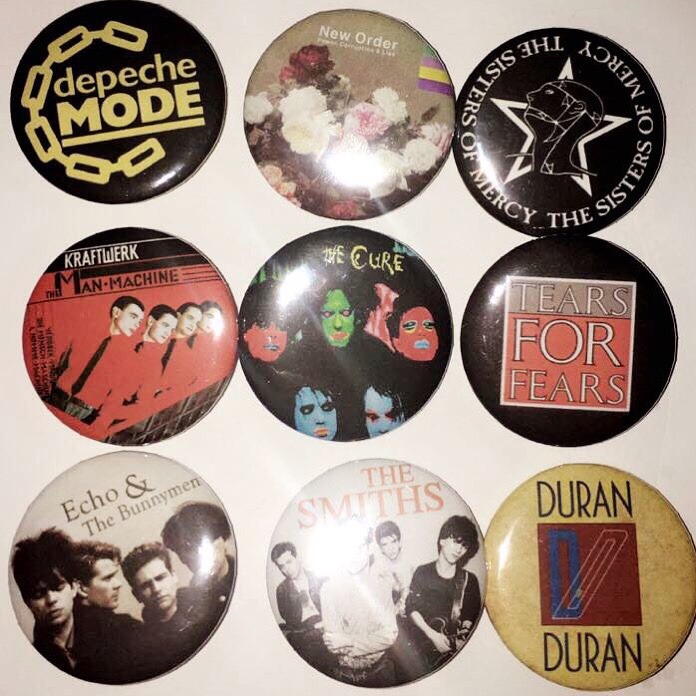
Spillette dei Depeche Mode, New Order Sister Of Mercy, Kraftwerk, The Cure, Echo & The Bunnymen, The Smiths e Duran Duran.

spillette mod

spillette punk rock

spille punk 77

spillette ska 2tone

spillette mods

punk badge

spillette dei madness

spillette rude boys

spillette ska specials the beat ub 40

Ska, Rocksteady, Reggae, 2 Tone: le foto, le band, gli artisti e molto altro!

Come già fatto per la pagina delle sottoculture inglesi, in questa troverete "a random" le foto (e i video) delle band e gli artisti della musica in levare, che sia ska original giamaicano, rocksteady, reggae o 2Tone. Ad ogni band troverete dei link di riferimento per i vostri ascolti.

👁 Libri di musica e sottoculture: dal punk, al reggae, dal dark all'indie rock

Dimostrazione di una nuova danza in voga nei club di Londra: lo SKA. Era il 18 Settembre 1964 e le dancehall inglesi erano piene di kids giamaicani (i rude boys) che si sarebbero mischiati con i giovani bianchi della working class britannica, influenzando la musica, lo stile e le sottoculture a venire, mods e skinheads in primis.

Le foto delle sottoculture inglesi dal dopoguerra agli anni 80

Foto di Mods, Rude Boys, Skinheads,Suedeheads, Herberts, Boot Boys (ed altro) nell' Inghilterra del dopoguerra.

THIS IS (real) ENGLAND: una pagina che raccoglie le foto e i "frammenti di vita" di quel che sono state le sottoculture inglesi dagli anni 50 ad oggi e che hanno avuto uno stretto rapporto con la musica ska, rocksteady e reggae. Rude boys, hard mods, soul boys, skinheads, suedeheads, boot boys, herberts e chi più né ha più né metta.
Una serie di immagini (spesso in bianco e nero) per fare in modo che tutto questo non vada perso come lacrime nella pioggia. 

Ti potrebbe interessare: 
👉Libri di musica e sottoculture: dal punk, al reggae, dal dark all'indie rock

Crombie, Loafers e camicie button down: Suedehead style

Libri di musica e sottoculture: dal punk, al reggae, dal dark all'indie rock

Musica e libri 
Una lista di libri che potrebbero interessarti: dalla musica punk alla new wave, dallo ska al brit pop, dal madchester al reggae e le sue sottoculture correlate. Alcuni pubblicati recentementre, altri meno.


Libri sui mods e il modernismo:

Arcipelago mod. Il mod revival in Italia 1979-1985. Di Stefano Spazzi


Libri sul punk in Italia:


Bologna 1980. Il concerto dei Clash in Piazza Maggiore nell'anno che cambiò l'Italia


Freak out. Freak Antoni. Psicofisiologia di un genio


Libri sul post-punk, new wave e dark:

Grafika 80! Italian New wave, Punk, Dark, Industrial. Ediz. a colori


Nessuna voce dentro. Un'estate a Berlino Ovest (di Massimo Zamboni)


Dov'eri tu nel '77? (Federico Fiumani)


Libri sul Brit Pop, Madchester e Indie Rock:

Britannica. Dalla scena di Manchester al britpop


Libri sulle tifoserie violente, casuals, hooligans e ultras:

Ribelli, sociali e romantici. FC St. Pauli tra calcio e resistenza


Binario 15. Il calcio britannico. Un viaggio in treno tra luoghi, rituali e rivalità senza tempo
Città stadio. Partite, allenatori, giocatori. Viaggio negli storici impianti da Highbury all'Old Trafford, testimonianze di uno sport che unisce intere generazioniLondon calling. La storia dell'Arsenal e di un secolo e mezzo di football all'ombra del Big Ben
Le reti di Wembley. Viaggio nostalgico nella Londra del calcio

Post più popolari